The Imagination Library began with one county, one book a month
and a promise that lasted until a child turned five. Its genius was
making reading ordinary.
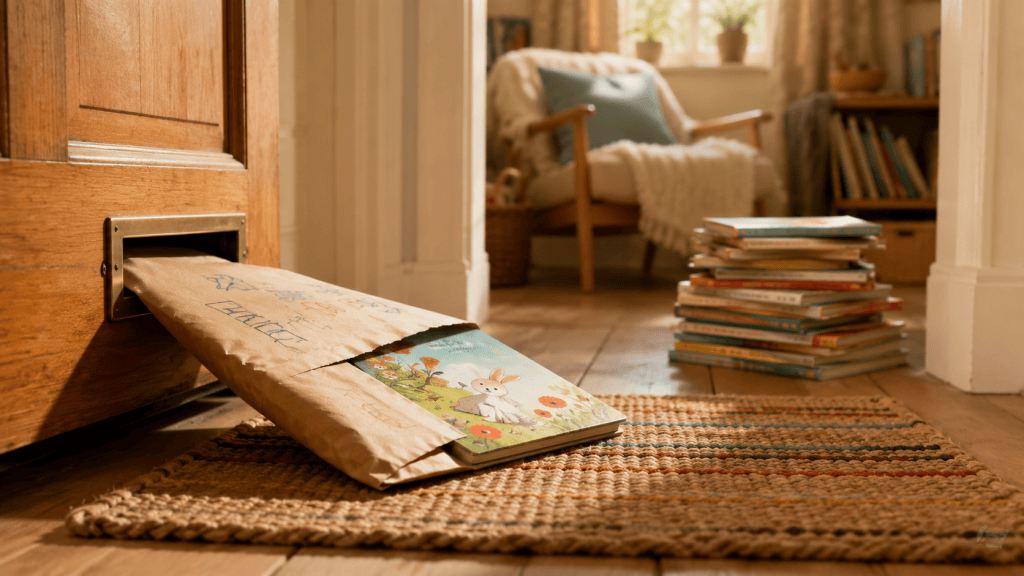
Once a month, a small package arrives with a child’s name printed on
it.
There is no test inside, no demand that the family prove how often
they read and no bill. There is simply a book, chosen for the child’s
age and posted directly to the home. A baby may chew the corners. A
toddler may demand the same story every night. An older child may
recognise their own name on the label and understand that this object
belongs to them.
That quiet ritual is the heart of Dolly Parton’s Imagination Library.
It began in 1995 in Sevier County, Tennessee, where Parton grew up, and
expanded into an international early-literacy programme serving children
from birth to five.
Its scale is impressive. Its more important lesson is about how a
simple system can alter family life.
The father behind the idea
Parton repeatedly connected the programme to her father, Robert Lee
Parton. He was highly intelligent, she said, but had not had the
opportunity to learn to read and write.
The Imagination Library was conceived as a tribute to him and as an
answer to a local problem. Children cannot choose the income of the
household into which they are born, the distance to a library or the
number of books already on the shelf. Giving books directly to every
enrolled child removed several of those barriers at once.
The first scheme covered children in Parton’s home county. Local
partners registered families while the Dollywood Foundation managed the
book selection and mailing. When other communities asked to copy it, the
organisation developed a model that could travel.
Why post the books to the
child?
Book-gifting is not the same as building a library or improving a
school, and it does not replace either. Its advantage is that it enters
the home.
A book addressed to a child is both reading material and an event.
The delivery creates repetition: a new prompt arrives every month, not
just during a short campaign. Over five years, that can become a
personal collection of as many as sixty books.
Ownership matters. Families do not have to return the book on time,
worry about damage or choose between an unfamiliar range of titles.
Parents and carers can read it whenever the child is receptive — at
bedtime, on a rainy afternoon or five times in succession before
breakfast.
The scheme also avoids presenting reading as a remedy reserved for a
visibly disadvantaged group. Within a participating area, eligibility is
generally based on age and residence. That helps make the parcel a
normal part of childhood rather than a mark of need.
A local programme built to
be copied
The Imagination Library’s expansion depended on dividing the
work.
The central organisation selects books, negotiates large-scale
production and coordinates distribution. Local partners raise funds,
promote the programme and enrol children in an agreed geographical area.
Neither side could easily achieve the same result alone.
This structure allowed the library to expand across the United States
and into Canada, the United Kingdom, Australia and the Republic of
Ireland. The UK programme began in 2007. Titles and selections vary
between countries so that language, culture and publishing arrangements
can be considered.
The result is not one giant warehouse generously dispatching
identical parcels everywhere. It is a network: central expertise joined
to local relationships and funding.
What can a monthly book
change?
Research on book-gifting programmes requires care. Families choose
whether to enrol, communities differ and reading development is
influenced by many things. It is difficult to isolate one parcel from
parents’ education, nursery provision, household income and the
countless conversations surrounding a child.
Even so, evaluations collected across several countries repeatedly
report outcomes that are plausible and valuable. Participating families
often read together more frequently, children show strong enthusiasm for
the books, and parents say they feel more confident about shared
reading. Some studies also find improvements in measures of early
literacy or school readiness.
The mechanism is not mysterious. Young children build language
through interaction. They hear unfamiliar words, connect pictures to
ideas, learn how stories work and discover that print carries meaning.
The adult’s questions, expressions and digressions can matter as much as
the words on the page.
A mailed book cannot guarantee that conversation. It can make it much
easier to begin.
The difficult
work hidden by a simple promise
“A free book every month” is memorable because it conceals a
complicated operation.
Editors and early-years specialists must choose books suitable for
each stage of development. Printers need predictable large orders.
Address data must be accurate and protected. Parcels have to meet postal
rules. Local partners must raise money year after year, not merely at
launch.
The programme’s longevity rests on these unglamorous systems.
Celebrity opened doors, but administration kept the books moving.
That distinction matters when people discuss philanthropy. A generous
donation can create a moment. A durable institution needs a process that
still functions when attention moves elsewhere.
More than a famous name
Following Dolly Parton’s death in August 2026, tributes naturally
returned to her music, films and unmistakable public image. The
Imagination Library reveals another side of her cultural
achievement.
She used fame as infrastructure. Her name attracted partners and made
families curious. But the programme did not ask children to admire Dolly
Parton. It gave them The Little Engine That Could, picture
books, rhymes, facts, characters and a shelf that gradually filled.
The best celebrity philanthropy eventually becomes more useful than
the celebrity story attached to it. It acquires local organisers,
research, routines and recipients who may know the books better than the
founder.
The parcel with a name on it
Early literacy policy can sound abstract: language exposure, parental
engagement, school readiness. The Imagination Library translates those
ambitions into something a two-year-old can hold.
Its central insight was not that books are magically sufficient. It
was that access should be regular, personal and pleasantly unavoidable.
The next story comes whether the previous one became a favourite or
disappeared under the sofa.
Millions of books entered millions of homes because a large
international mission retained the shape of a tiny promise: this month,
there will be something new to read together.
Quick facts
- The programme began in Sevier County, Tennessee, in 1995.
- It was inspired by Dolly Parton’s father, who had not learned to
read and write. - Enrolled children receive an age-appropriate book every month from
birth to age five. - The UK programme began in 2007.
- The network operates in the United States, Canada, the United
Kingdom, Australia and the Republic of Ireland.
Sources and further reading
- Dolly Parton’s
Imagination Library — About the programme - Dolly
Parton’s Imagination Library — International research - Dolly
Parton’s Imagination Library — United Kingdom - Education
Week — The programme’s future and literacy mission, August 2026 - The
Guardian — Dolly Parton’s philanthropic legacy, 26 August 2026





 The Knowledge Back Catalogue
Leave a comment