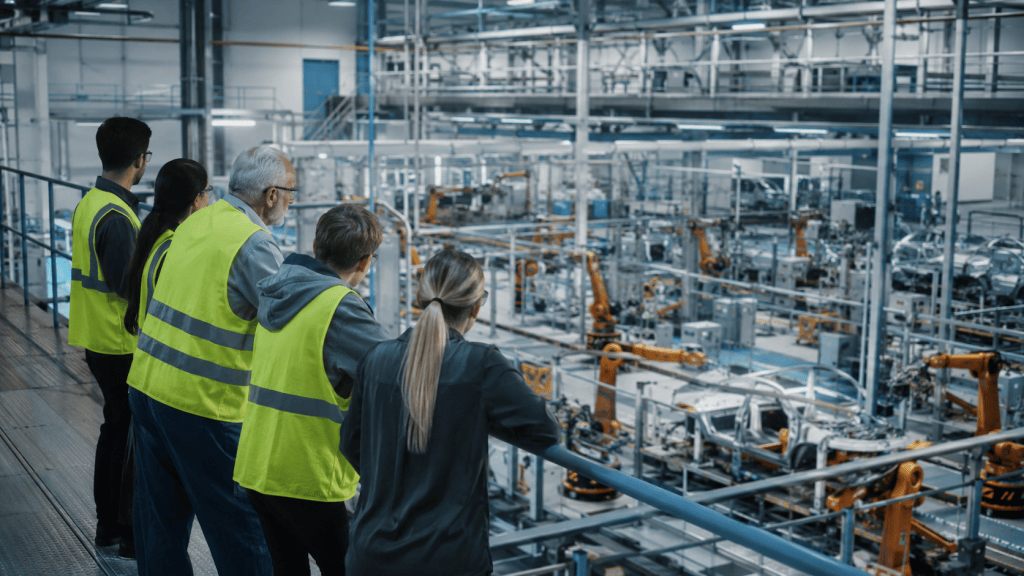
Factories are designed to make things, not to entertain visitors.
That is precisely why watching one at work can be more compelling than a
purpose-built attraction.
Executives and technology enthusiasts now travel to see Chinese
electric-vehicle plants, robotics companies and automated production
lines. Their journeys sound distinctly modern, but the desire to look
behind the factory gate is old.
Breweries, potteries, mines, chocolate makers, railway works and car
plants have all welcomed visitors. Some tours sell a product; some
preserve industrial heritage; others offer professional learning. All
answer the same basic question: how does an ordinary object come into
existence?
The pleasure of
transformation
A factory tour supplies a visible chain of cause and effect. Raw or
unfinished material enters. Machines and people perform specialised
tasks. A recognisable product emerges.
Modern life often hides this transformation. A phone, train carriage
or chocolate bar appears as a finished object in a shop. Its supply
chain may stretch across continents, but the consumer sees only
packaging.
Inside a factory, scale becomes physical. Visitors hear presses,
smell timber or hot sugar, feel heat and watch hundreds of identical
actions accumulate into output. Even a familiar product becomes strange
when multiplied across a moving line.
Promotion with machinery
Manufacturers understood early that a tour could create trust.
Breweries and food companies could demonstrate cleanliness and quality.
Potteries could show skilled decoration. A visitor who watched a product
being made became more likely to remember, discuss and buy it.
The Peugeot company was organising factory study visits by the 1930s.
Cadbury’s Bournville and Wedgwood’s Staffordshire identity linked
manufacturing, place and public curiosity. Distilleries turned
production methods and ageing warehouses into stories that made brands
feel rooted.
Tours also humanise industry. A complex organisation becomes a guide,
a craftsperson and a sequence of understandable operations.
Work is the exhibit
A working factory differs from an industrial museum. The museum can
preserve old machines, restore inaccessible processes and explain the
lives of workers without production pressure. A live plant offers
immediacy: the thing is happening because somebody needs the output.
That authenticity creates tension. Visitors must fit around safety,
security and commercial confidentiality. They may see only selected
areas and carefully choreographed demonstrations. The view is real but
never complete.
Some companies use glazed walkways or viewing galleries to separate
the public from machinery. Others schedule tours when production is
slower. Photography may be restricted. The compromises reveal that the
factory’s first purpose remains production.
Pilgrimage for professionals
Not every visitor is a tourist. Engineers, managers and investors
tour plants to observe layout, automation, quality control and working
culture. Japan’s postwar manufacturing methods attracted study missions;
Silicon Valley later became a destination for people seeking the habits
of technology companies.
China’s advanced-manufacturing tours belong to this tradition.
Visitors are not only viewing robots or electric vehicles. They are
trying to understand an ecosystem: suppliers, speed of iteration,
government support, infrastructure and the movement of knowledge between
companies.
The risk is mistaking a curated tour for the whole system. A
spectacular production line cannot by itself explain costs, labour
conditions, reliability or whether the approach transfers elsewhere.
When production becomes
heritage
Factories close, technologies change and industrial regions lose
their original economic purpose. Tourism can then preserve buildings and
stories. Mines become visitor attractions; blast furnaces become
monuments; railway workshops become museums.
The Ruhr’s Route of Industrial Culture connects former mines, works,
settlements and infrastructure across hundreds of kilometres. The
landscape itself becomes the exhibit.
Working factories provide the missing present tense. They remind
visitors that industrial heritage was never just architecture. It was
organised motion, noise, skill, risk and thousands of repeated
decisions.
A window onto systems
The best factory tours show more than machines. They reveal
dependencies: deliveries arriving at the right moment, energy and water
consumed, waste removed, quality checked and people coordinating
exceptions the automated line cannot handle.
That is why they remain fascinating even as production becomes more
enclosed and robotic. A factory makes the invisible systems of everyday
life briefly visible.
People pay to see working factories because finished objects conceal
their own histories. Cross the gate and a product stops being a thing.
It becomes a process.
Quick facts
- Factory visiting long predates modern technology tourism.
- Tours can serve marketing, education, professional study and
heritage preservation. - Working sites must balance visitor access with safety, security and
production. - Industrial tourism includes active plants as well as museums and
former industrial landscapes. - The Ruhr Route of Industrial Culture links 27 major anchor sites
across a 400-kilometre route.


 The Knowledge Back Catalogue
Leave a comment