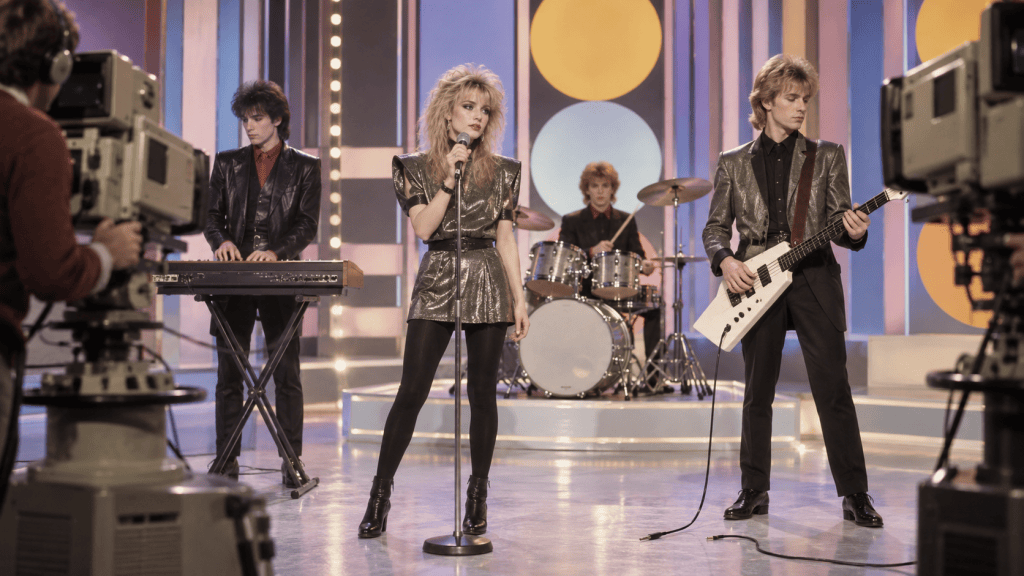
For generations of British viewers, Thursday evening contained a
curious bargain. Top of the Pops promised the week’s most
exciting music, yet many of the musicians on screen were not producing
the sounds being heard.
Fingers landed near strings. Drummers hit with theatrical force.
Singers sometimes performed live over a prepared track and sometimes
appeared to sing to the finished record. Observant viewers could spot
instruments that were not plugged in—or performers who made certain that
everybody spotted them.
Why would the BBC build the country’s leading pop programme around
such obvious artifice?
A chart show was not a
concert
The programme began in 1964 and had to assemble a fast-moving
selection of current hits in a television studio. Each act might arrive
with different instruments, amplifiers, personnel and expectations.
Properly setting microphones, balancing the sound and rehearsing every
group would consume time the weekly schedule did not possess.
Recorded music offered predictability. A single could be timed
exactly, its mix already approved. Cameras could concentrate on faces
and movement without a feedback howl or failed connection ruining the
broadcast.
Television sound was also reaching viewers through modest
loudspeakers. The studio performance had to survive broadcast
transmission and domestic sets, not just satisfy the people in the
room.
The rules changed over time
“They all mimed” is a tempting summary, but practice varied across
the programme’s long life. BBC agreements with the Musicians’ Union
affected how much commercially released recorded material could be used.
At various periods, artists were asked to make new backing tracks, often
with BBC musicians, and perform a live vocal over them. Elsewhere, the
original recording or a specially prepared version supplied most of the
sound.
This created odd hybrids. A performance could look mimed yet contain
a genuinely live vocal. A familiar hit could sound subtly different
because it had been re-recorded. Rules were revised as music technology,
labour agreements and production priorities changed.
The system was therefore less a single prohibition on live music than
a continuing compromise between employment, authenticity, cost and
reliable broadcasting.
Some
artists treated the pretence as part of the show
Playback removed one kind of risk but introduced another: the
musicians no longer needed to behave plausibly.
Performers swapped instruments, exaggerated gestures, ignored their
parts or revealed the joke through deliberate mistakes. Such protests
could express annoyance at not being allowed to play, but they also
produced memorable television. The audience became part of the game,
invited to notice the gap between heard record and visible
performance.
The curious result was that compulsory imitation sometimes generated
a more distinctive performance than straightforward live playing would
have done.
Viewers were not
necessarily deceived
Miming is often discussed as though the programme secretly passed a
recording off as a concert. Most regular viewers understood the
convention. They were watching for clothes, charisma, choreography and
the communal confirmation that a record had become a hit.
Before music videos could be summoned instantly, Top of the
Pops supplied faces to accompany sounds previously encountered on
radio. Its studio audience and charts turned listening into a national
weekly occasion.
Authenticity in that setting did not mean that every note originated
in the room. It meant access to the current pop world.
Live music
eventually became easier—and expected
Portable equipment, multitrack systems, digital desks and in-ear
monitoring improved the ability to change acts quickly. Audience
expectations also shifted. Music television, festival broadcasts and
online performance videos made live sound an attraction rather than an
avoidable technical hazard.
Yet the basic production problem remains. Awards programmes and
televised spectaculars still use backing tracks, clicks and pre-recorded
elements because complicated shows must run to the second. The boundary
between live and recorded is usually a spectrum.
Top of the Pops exposed that spectrum more cheerfully than
most. Its miming was a practical solution, an industrial compromise and,
at times, an invitation to misbehave in front of millions.
Quick facts
- Top of the Pops began on the BBC in 1964.
- Performance practice changed repeatedly across the programme’s
history. - Some singers performed live vocals over prepared backing
tracks. - Musicians’ Union agreements influenced the use of commercial
recordings and studio musicians. - Playback helped a weekly television show present several differently
equipped acts quickly.




Leave a Reply